
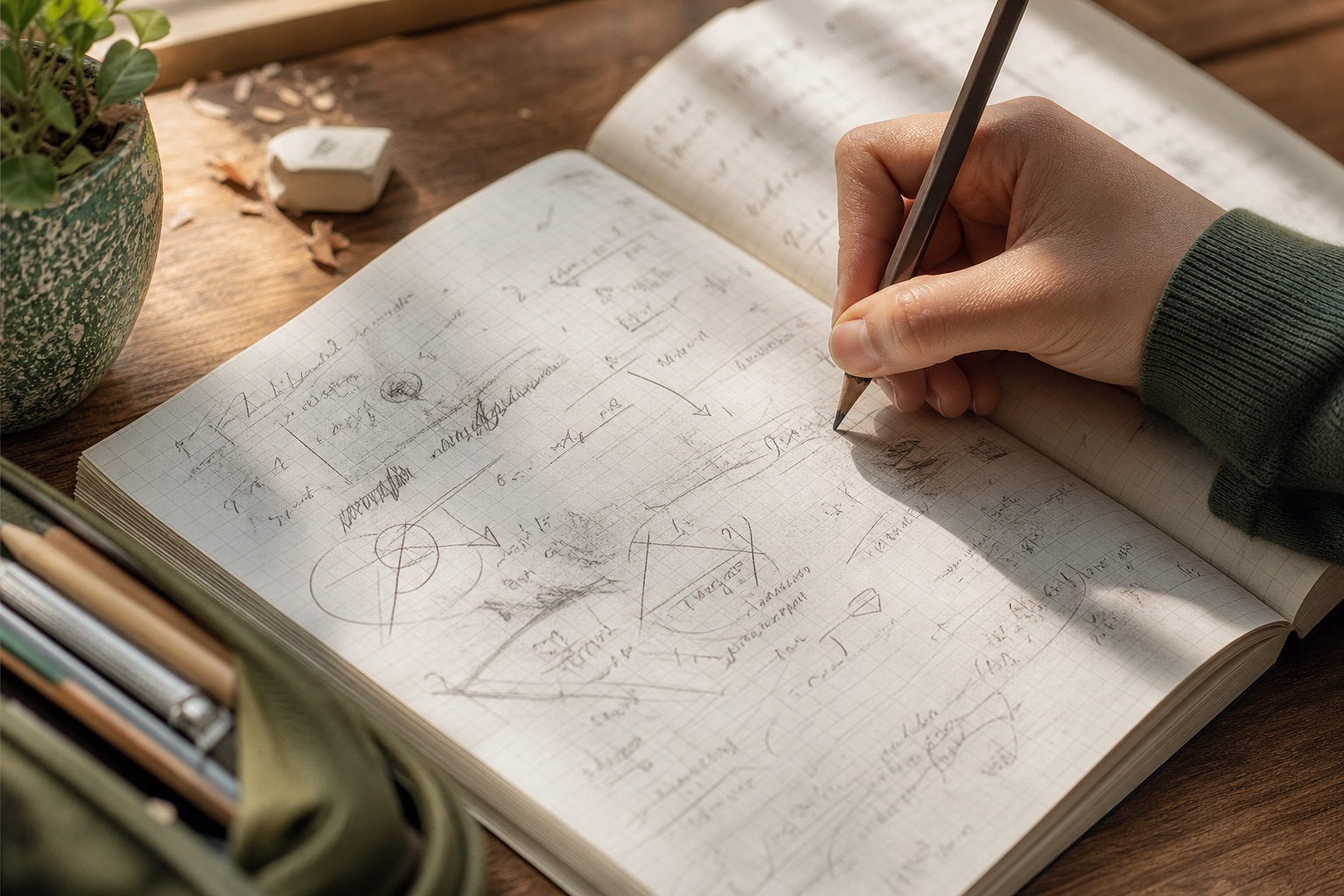
Every few years someone declares handwriting dead. The keyboard is faster. The tablet is tidier. Why make a kid cramp their hand forming letters when they'll type everything for the rest of their lives? It sounds obviously correct, which is usually a sign nobody checked.
Here's the thing the "just type it" argument misses: in learning, speed is not a feature. The whole value of writing something down is that it forces your brain to do work, and the friction of the pencil is a feature disguised as a bug.
The generation effect
Cognitive scientists have a tidy name for the core mechanism: the generation effect. Information you produce yourself is remembered substantially better than the identical information handed to you. Fill in the blank and you'll remember it; read the completed sentence and you mostly won't.
Typing notes tends to slide toward transcription. It's fast enough that you can capture words nearly verbatim without processing them, a very efficient way to move text from a slide into a document while learning almost nothing. Handwriting is too slow for that. Because you can't get every word down, you're forced to listen, compress, and rephrase in your own words. That compression is the learning. The bottleneck does the teaching.
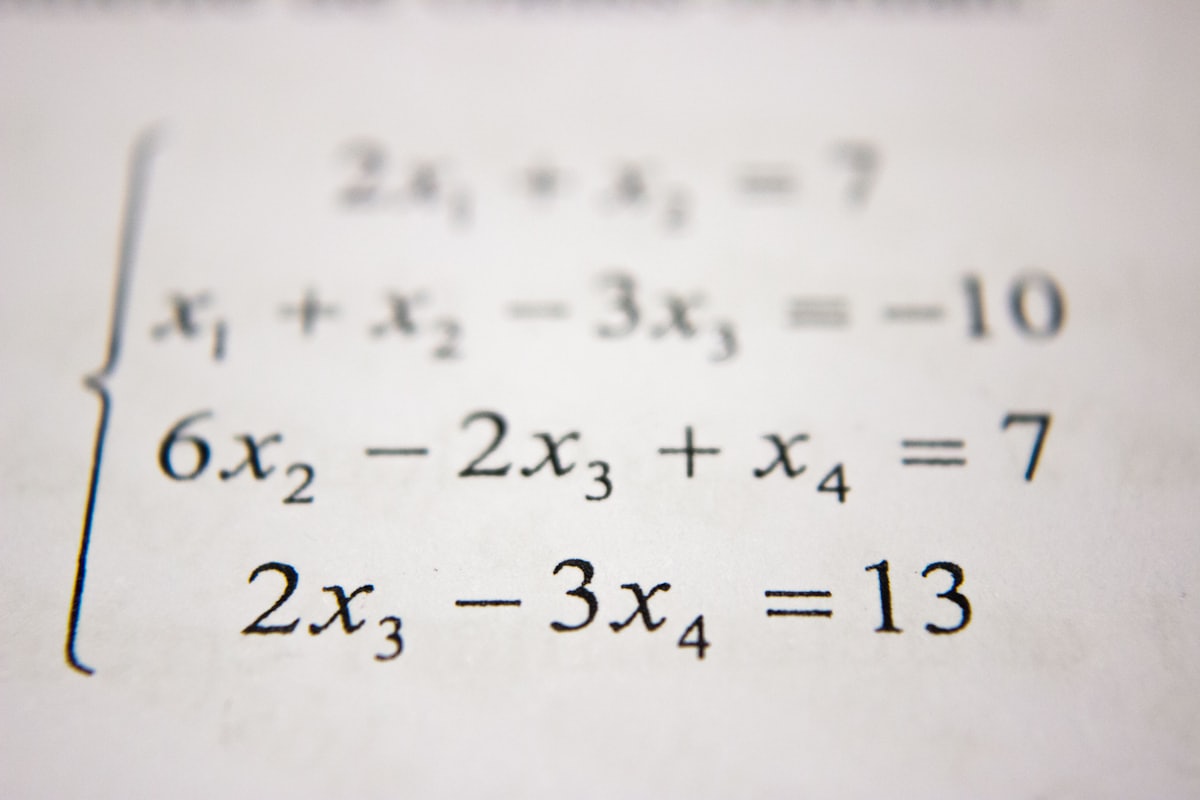
Nowhere is this sharper than in math and the sciences. A worked problem isn't a fact to be filed; it's a sequence of moves. Write it by hand and you have to commit to each step, this term cancels, that substitution is legal, this is where the sign flips. Every one of those is a tiny decision your brain has to actually make. Type it, or worse, watch a solution scroll past, and you get to nod along without ever making a single one.
Your hand knows things
There's a second, weirder reason. Forming characters by hand recruits motor systems and richer visual-spatial processing than tapping a uniform key. The physical act of drawing a "∫" or a Punnett square or a free-body diagram leaves a more distinctive trace than typing a symbol that looks identical to every other symbol. You're not just recording the idea; you're building a motor and spatial memory of it. Your hand, annoyingly, remembers things your search history never will.
The friction of the pencil isn't the tax you pay to learn. It's the thing you're paying for.
So why does everything push the other way?
Because typing wins every metric except the one that matters. It's faster to produce, easier to store, trivial to search, and it feels productive. Learning, meanwhile, is invisible in the moment and only shows up later on the test you can't cram for. So the measurable thing beats the meaningful thing, and we quietly optimize school around output that's easy to count.
The irony is that the tools got so good at removing friction that they removed the part that was doing the work. A frictionless path through a problem set produces a finished problem set and an empty head.

Why Lune Synth starts with the pencil
This is the whole reason Lune Synth™ is built the way it is. We don't want a clean typed answer; we want the messy handwritten work, the crossed-out lines, the half-step you weren't sure about, the place the reasoning wobbled. That's where the learning lives, and it's the only thing worth grading.
So the loop keeps the friction that helps and removes only the friction that never did: do the work by hand, scan it in, and get rigorous feedback that points at the exact step, instead of a neat solution that quietly does the thinking for you. The pencil isn't nostalgia. It's the interface to your own brain, and we're not interested in replacing it.
Want to try it? We're rolling out invites to the beta now, and joining the waitlist is free. Drop your email on the home page and we'll reach out when it's your turn. Thoughts or pushback? griffin@lunesynth.com.